

How it works
System overview
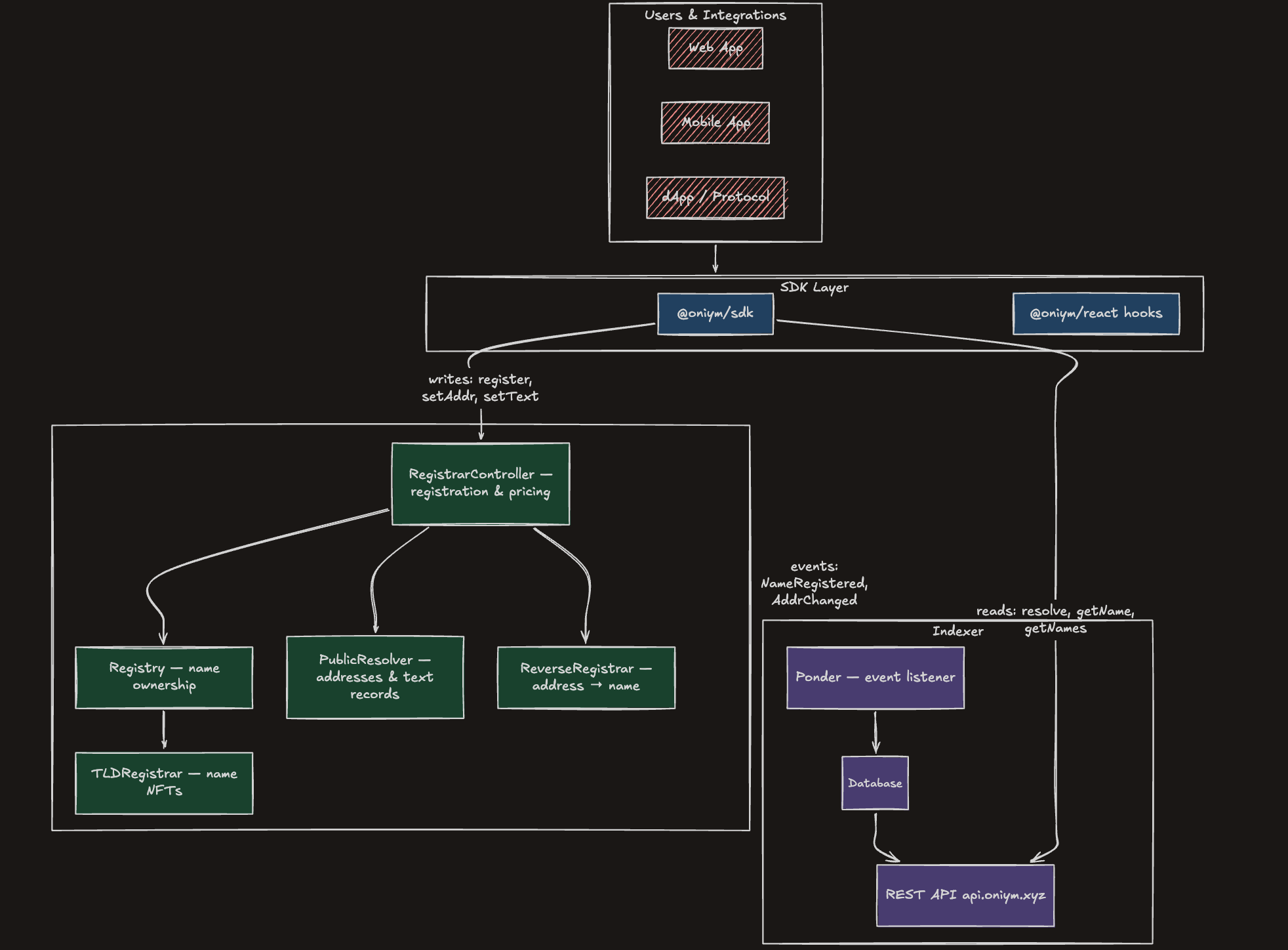
Name structure
Every Oniym name is a two-part label: <label>.<tld> — for example kyy.web3 or alice.id.
- Label — the unique identifier you register (e.g.
kyy) - TLD — one of 65 protocol-managed top-level domains (e.g.
web3)
Subnames (sub.kyy.web3) are not supported in v1.
Namehash
Oniym uses ENSIP-1 namehash to derive a deterministic 32-byte node for any name:
namehash("") = 0x00...00
namehash("web3") = keccak256(namehash("") ‖ keccak256("web3"))
namehash("kyy.web3") = keccak256(namehash("web3") ‖ keccak256("kyy"))The node is the canonical on-chain identifier for a name — used as the primary key in the Registry and all resolver records.
Registration flow
Registration uses a commit-reveal scheme to prevent frontrunning:
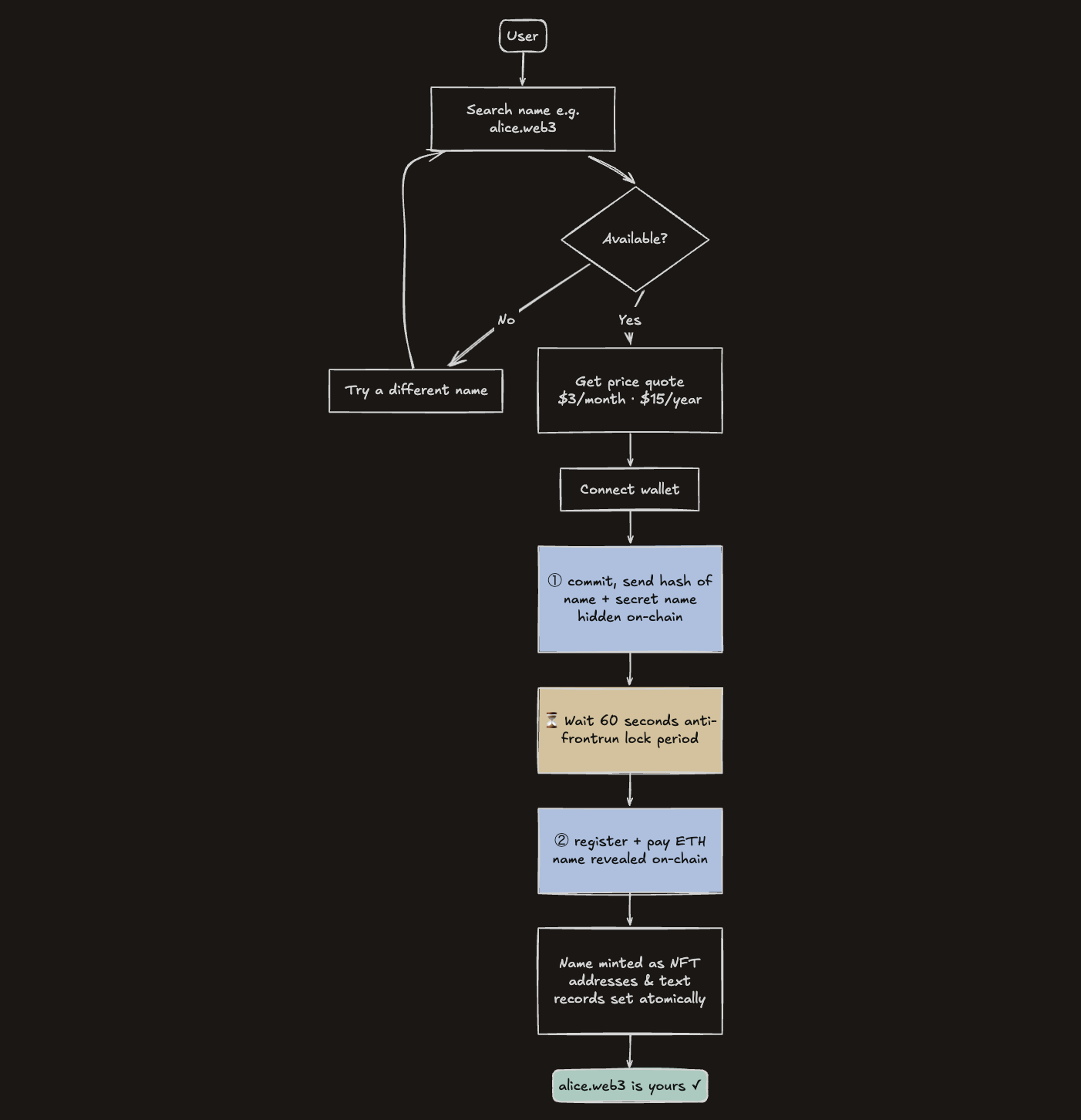
The req encodes name, TLD, owner, duration, a random secret, and optional resolver data. Because the commitment is a hash of all fields including the secret, nobody can copy your transaction and steal the name before you.
Multichain addresses
Addresses are stored per coin type following ENSIP-9 / SLIP-0044:
| Chain | Coin type |
|---|---|
| Ethereum / Base / EVM | 60 |
| Bitcoin | 0 |
| Solana | 501 |
| Sui | 784 |
| BNB | 714 |
Resolution flow
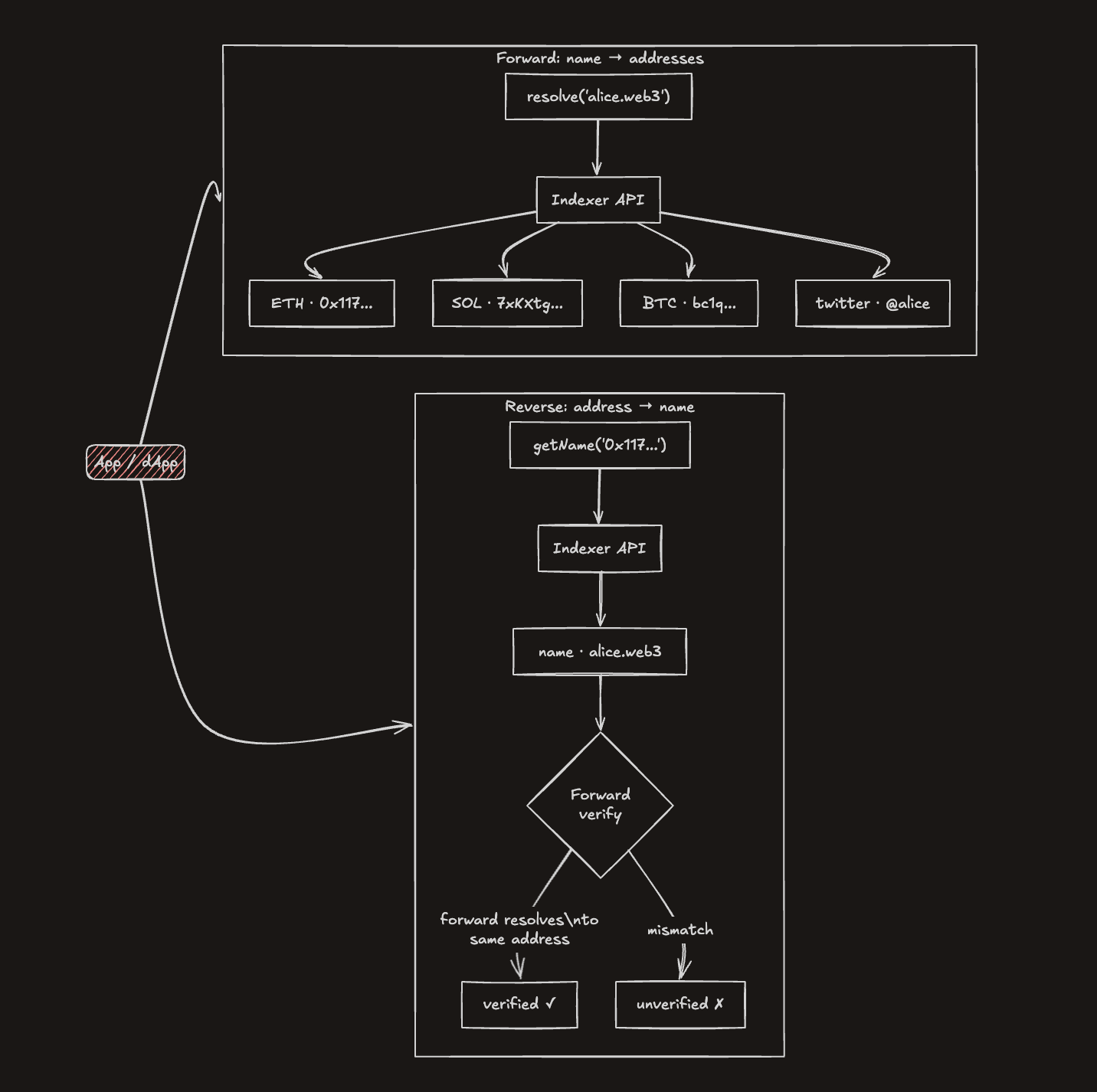
Reverse resolution
When registering with reverseRecord: true, the ReverseRegistrar contract sets a reverse record mapping address → name. This lets wallets and dapps display kyy.web3 instead of 0x1170....
Callers should always verify the forward resolution matches before displaying a reverse name as a verified identity.
Expiry and renewal
Names expire after their registration duration. A 90-day grace period follows expiry during which only the original owner can renew. After the grace period the name becomes available for anyone to register.